
before we begin:
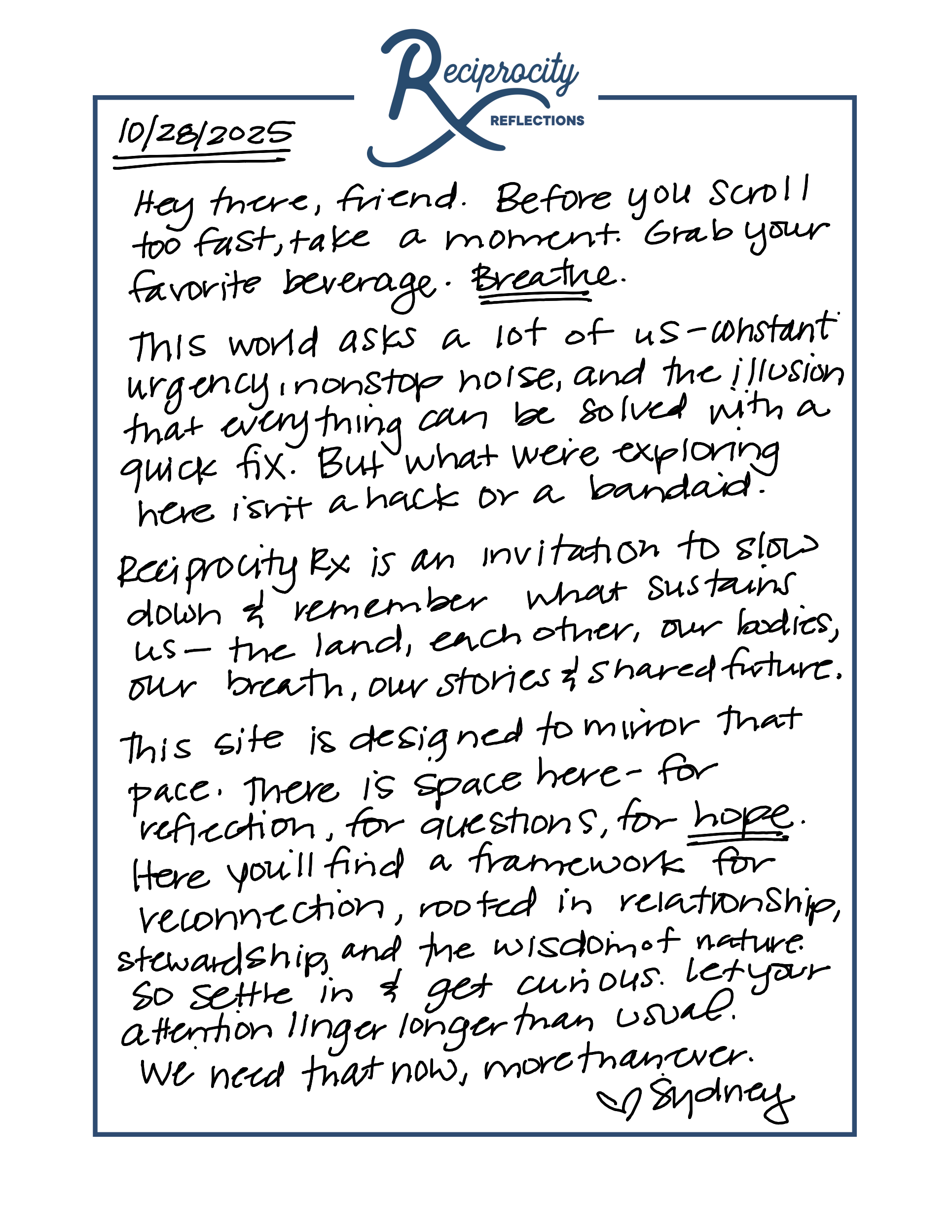
Hey there, friend. Before you scroll too fast, take a moment. Grab your favorite beverage. Breathe.
This world asks a lot of us — constant urgency, nonstop noise, and the illusion that everything can be solved with a quick fix. But what we’re exploring here isn’t a hack or a bandaid.
Reciprocity Rx™ is an invitation to slow down and remember what sustains us — the land, each other, our bodies, our breath, our stories and shared future.
This site is designed to mirror that pace. There’s space here — for reflection, for questions, for hope. Here you’ll find a framework for reconnection, rooted in relationship, stewardship, and the wisdom of nature. So settle in and get curious. Let your attention linger longer than usual. We need that now, more than ever.
or if you prefer a voice memo:

THE PROBLEM: At the root of illness, burnout, and despair is something deeper: disconnection.
FROM OUR BODIES
Chronic stress, fatigue, and illness are signals of our disconnection. When we stop listening to our bodies, we lose our first language of connection.
FROM EACH OTHER
We are surrounded by people yet starved for belonging — more connected than ever while loneliness and burnout have become epidemics.
FROM THE EARTH
We treat nature as a resource to use, rather than a relationship to tend. Our well-being is inseparable from the planet’s.
We are living in a time of profound disconnection — from our bodies, each other, and the living systems that sustain us.
The World Health Organization now calls social isolation a global public health concern. Rates of anxiety, depression, and chronic disease are rising alongside ecosystem collapse. In medicine, providers often treat disconnection as a symptom: stress, insomnia, hypertension, burnout. But what if disconnection itself is the diagnosis?
Reciprocity Rx™ begins here — with remembering relationship as the foundation of well-being. When we re-enter conversation with the land, with our communities, and with ourselves, we move from survival to connection, from extraction to reciprocity.
NATURE HEALS. Here’s the data:
RELIEF
20-30 mins in nature = lower cortisol, improved mood
According to a 2019 study by Hunter et al., just 20 to 30 minutes of sitting or walking in a place that feels connected to nature can significantly reduce cortisol levels — the body’s primary stress hormone. That’s one of the most accessible interventions we have for nervous system regulation.
RESILIENCE
120+ min/week = tipping point for health & well-being
White et al. (2019) analyzed data from nearly 20,000 people in the UK and found that people who spent at least 120 minutes per week in nature reported significantly higher levels of health and well-being than those who didn’t.
RELATIONSHIP
repeated exposure = deeper meaning & behavior change
In Japan, Li et al. (2007–2010) led a series of studies on forest bathing — or shinrin-yoku. Their research showed that extended time in forest environments increases natural killer (NK) cell activity and elevates anticancer proteins. These immune benefits lasted for more than 7 days post-visit.

A QUESTION:
What if healing becomes harmful?
Across the globe, physicians are beginning to prescribe time outdoors as part of treatment plans. In Sweden, they built an entire tourism campaign around “prescribing” a visit to the country for travelers to immerse themselves in its healing landscapes. Here in the U.S., nature prescriptions and social prescribing are gaining traction. Physicians and public health leaders are advocating for nature to become the seventh pillar of Lifestyle Medicine — a formal, scalable tool for long-term health.
And we love to see it.
But what happens when we prescribe nature at scale, without building reciprocity into what we’re prescribing?
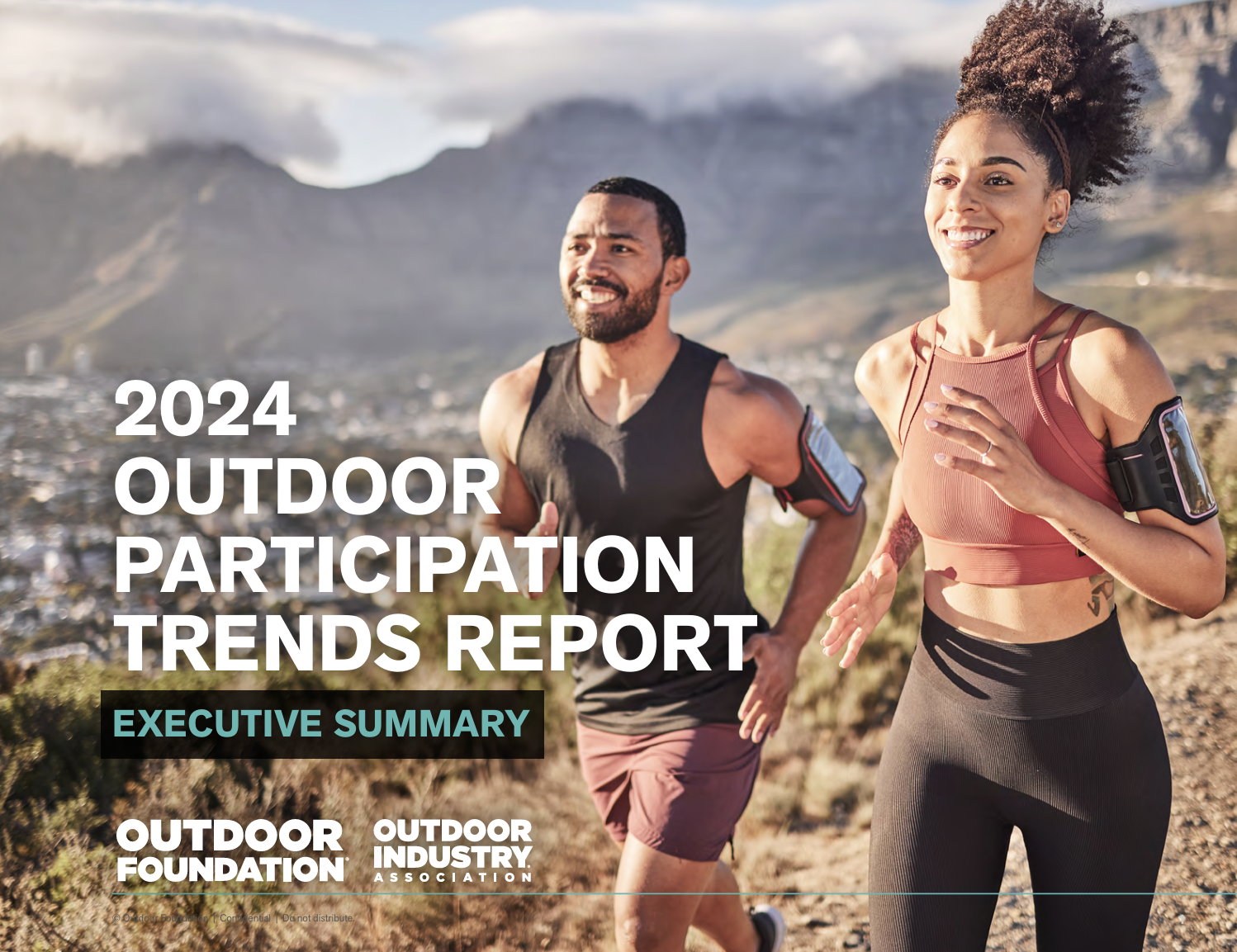
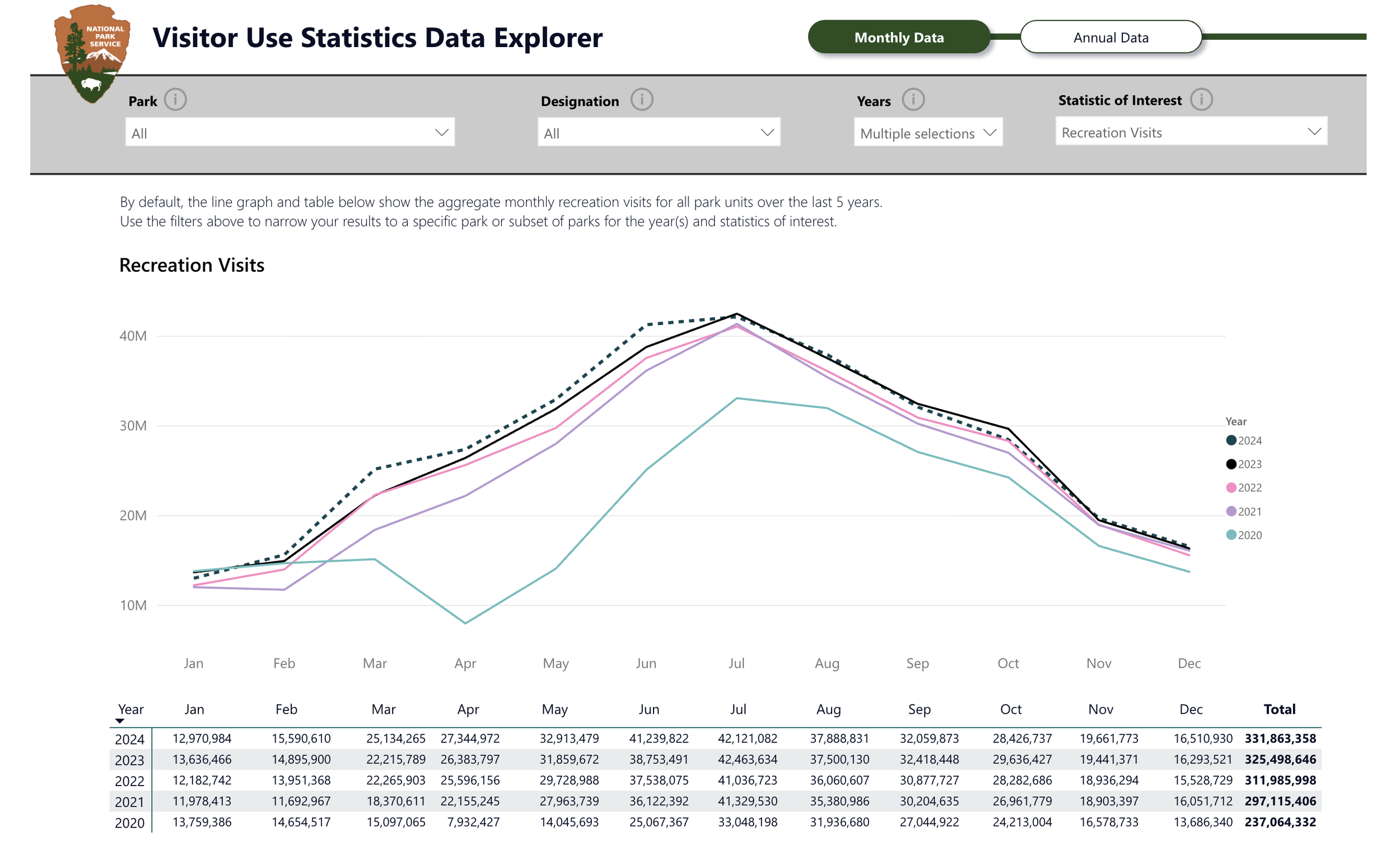
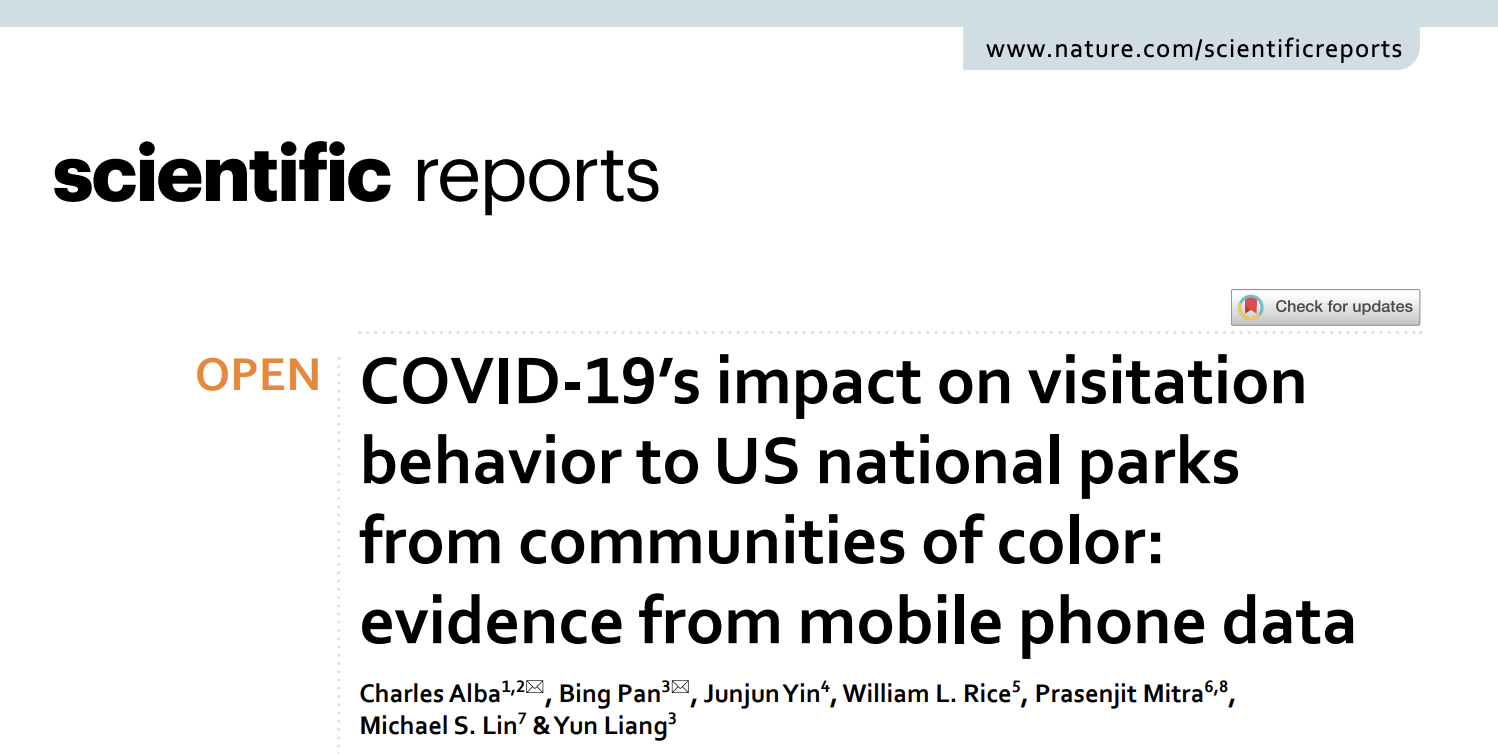
The pandemic gave us a preview. With concerts and sporting events canceled, gyms closed, and indoor spaces unsafe, people turned to the outdoors in record numbers. And the data shows the impact:
Outdoor recreation participation reached an all-time high in 2023, with 175.8 million people heading outside — a 4.1% increase from the year before.
National Parks experienced record-breaking visitation: 28 units hit all-time highs in 2024 alone.
Trails were overrun. Campsites were overbooked. Ranger teams were reallocated from conservation to crowd control.
And many communities — especially those already marginalized — saw decreased access, not more.
This surge showed us that nature is essential infrastructure, not a luxury. But it also revealed the risk of extractive healing — when we treat nature as a resource to consume rather than a relationship to nurture.
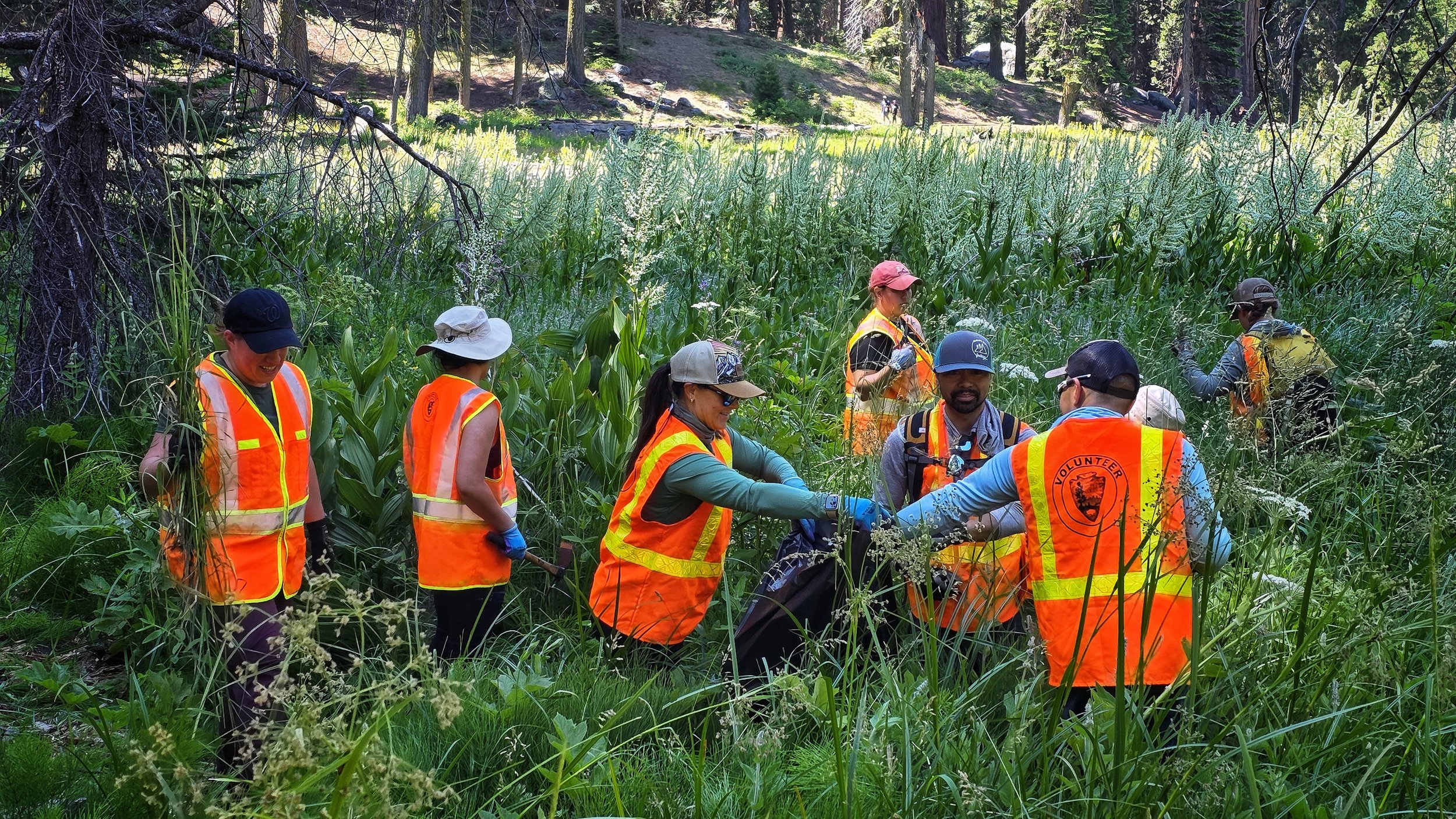
Healing in Nature → Healing with Nature

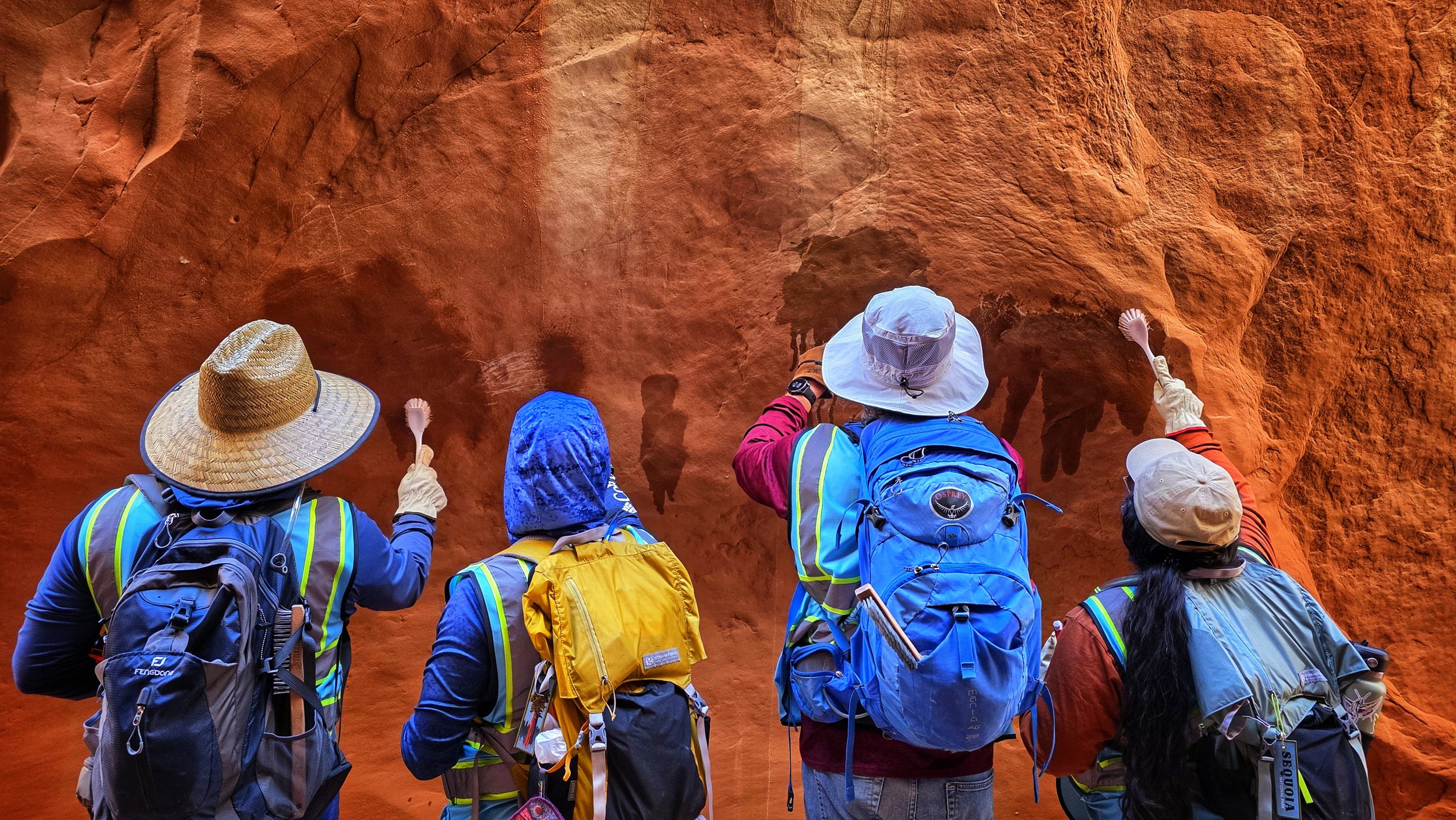
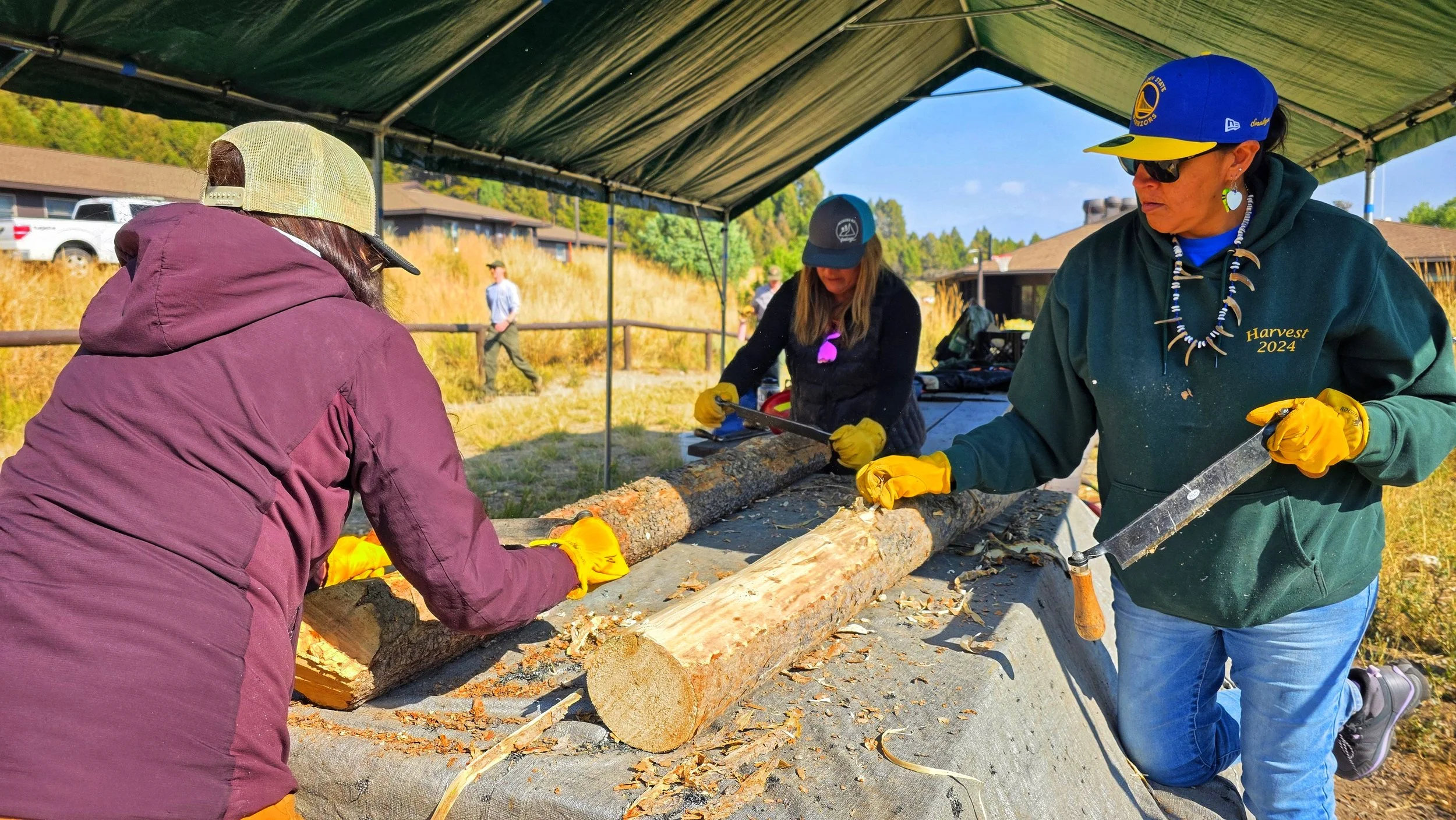
When relief becomes relationship, healing comes full circle.
Since time immemorial, humans have lived in harmony with the land. In modern society, we’ve turned to nature for refuge, restoration, and relief from the hyper-connected world we’re living in. But what if healing isn’t just something we get from nature — what if it’s something we practice with it?
Reciprocity Rx™ invites us to move beyond extraction-based wellness models and into a relationship-centered paradigm where our healing is interconnected with the Earth’s. This is not about escaping to nature for a reset. It’s about remembering we’re part of it, and that restoring our well-being goes hand-in-hand with restoring the planet.
We’re at a threshold moment: burnout, chronic illness, climate grief, and disconnection are converging. The opportunity — and responsibility — is to co-create a new model of care. One rooted in reciprocity. One where providers learn to receive from the land with reverence, reflect with intention, return through stewardship, and reconnect with themselves, their patients, and the Earth.
Reciprocity is a practice. And in a world that’s asking us to do more with less, this program offers a way to ground in enoughness, to lead with care, and to walk the path of healing with nature, not just in it.